Research projects
This page presents all published / ongoing research work to date
Research publications
Numerical aero-thermal study of flow around high pressure NGV cascade and film cooling study
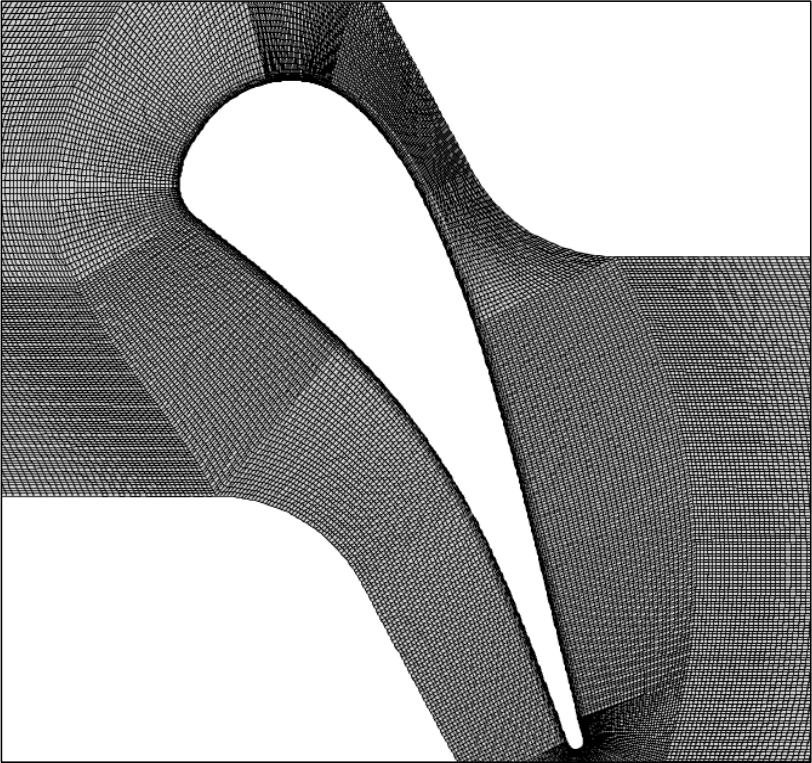
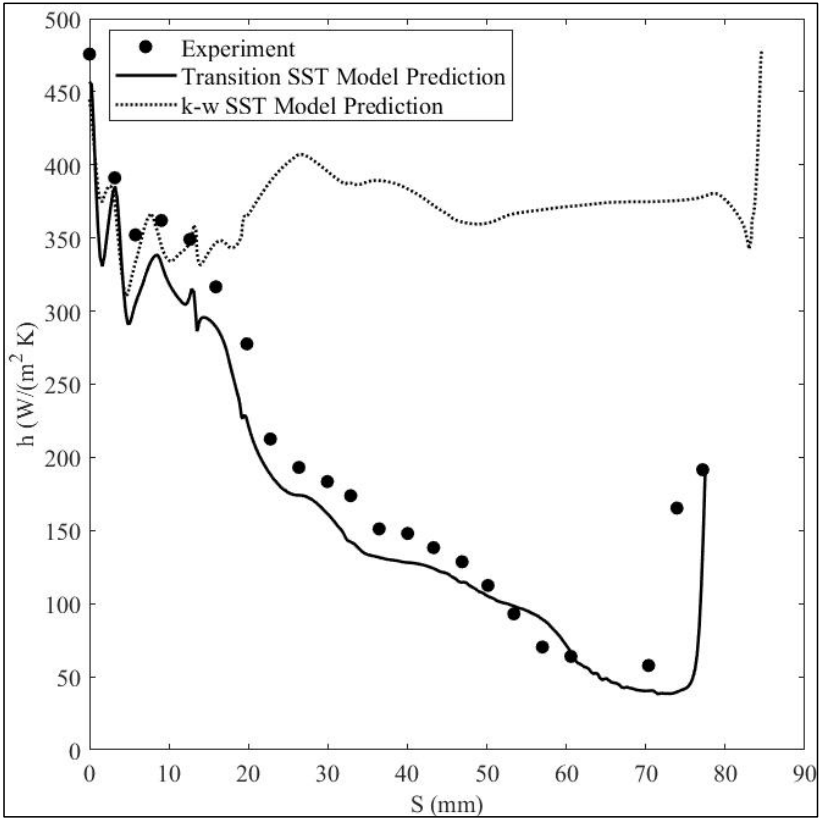
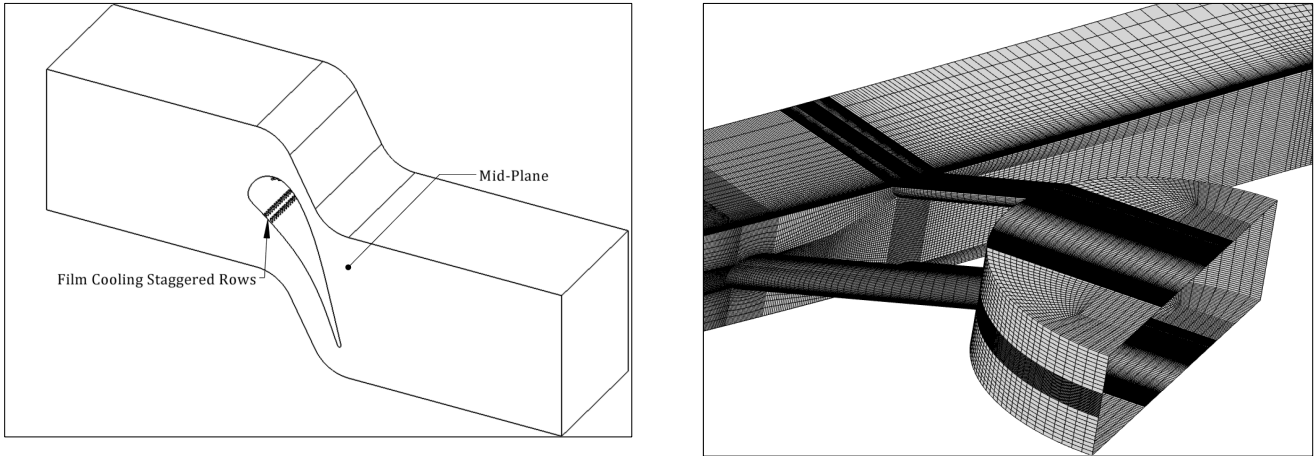
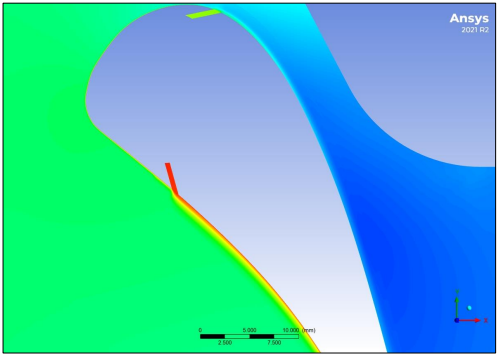
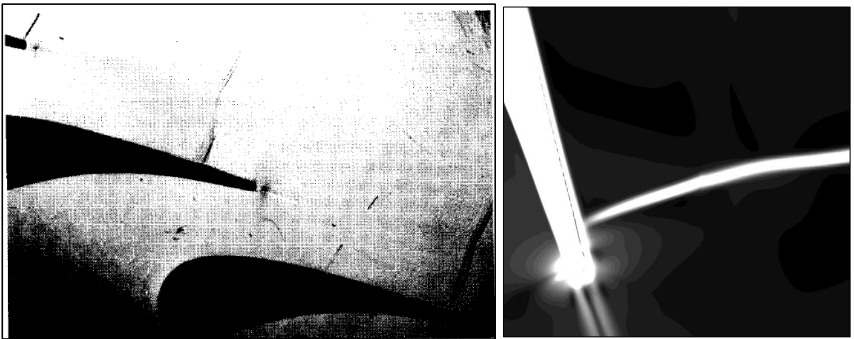
In this study, the LS-89 transonic NGV blade heat transfer characteristics were studied numerically using ANSYS FLUENT. The following studies were conducted:
- Validation of numerical setup using experimental data. Heat transfer and blade isentropic mach number around airfoil surface was benchmarked.
- Film cooling study was performed for two hole shapes-circular and 7-7-7 hole shape.
- 7-7-7 hole yielded superior film cooling performance.
- For complete set of results and discussion, please refer to my Bachelor's thesis and presented poster below.
Differentiable Singular Value Decomposition (SVD)
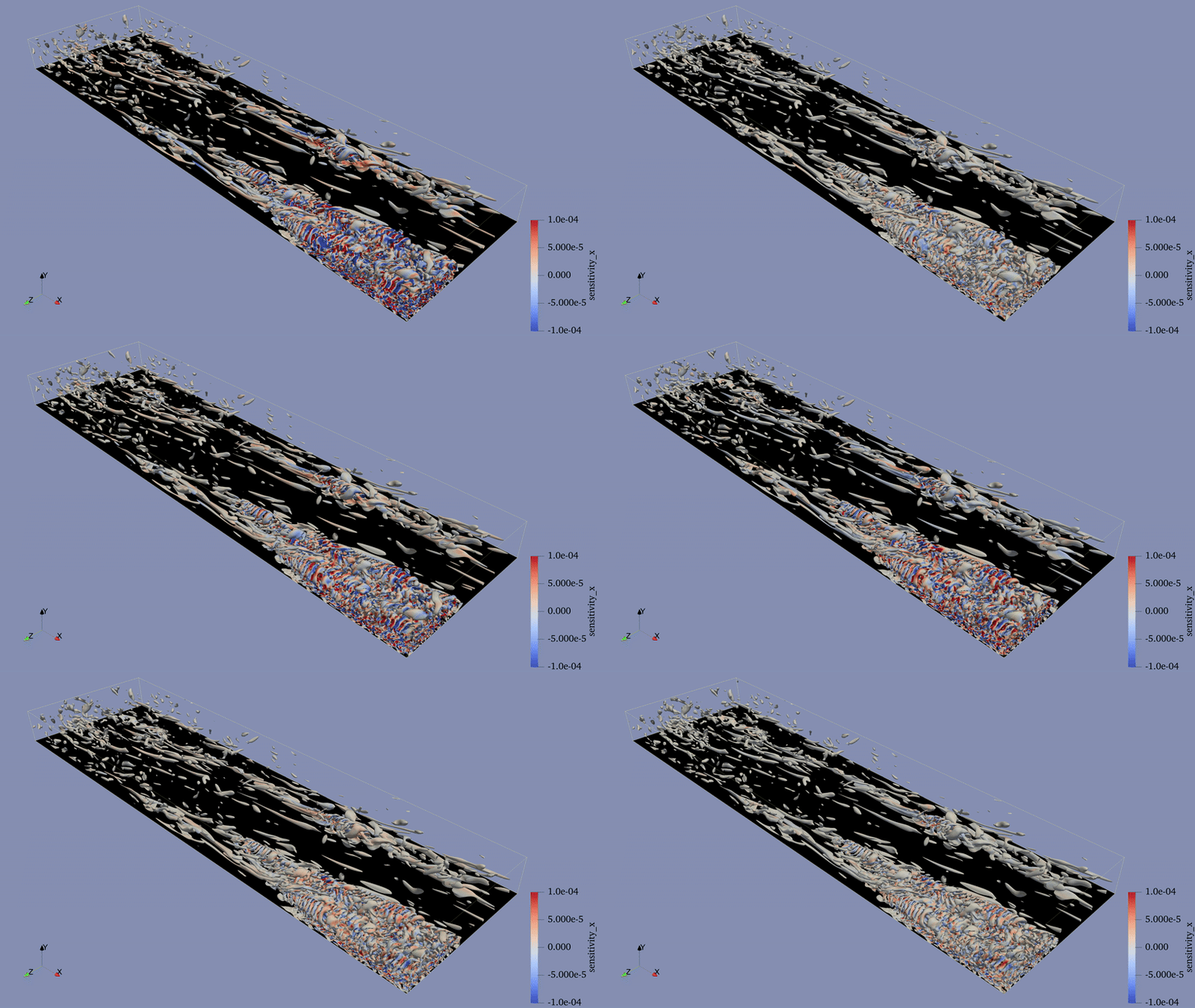
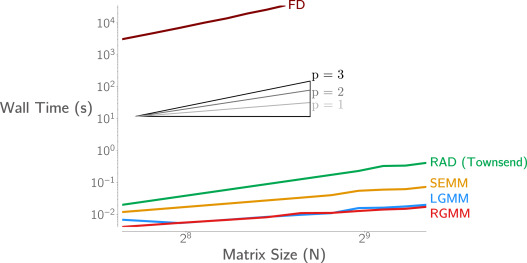
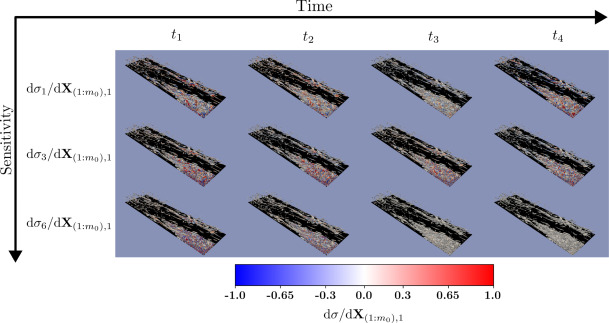
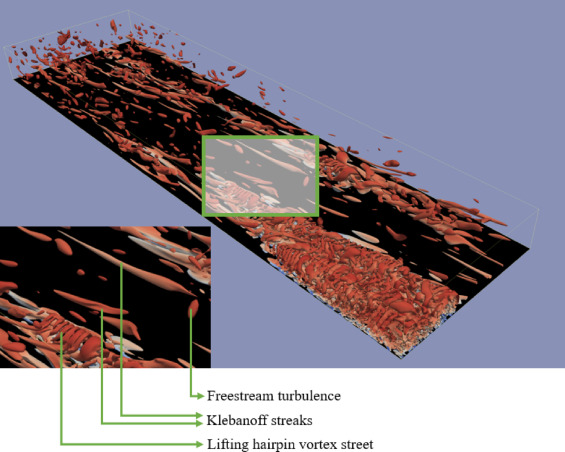
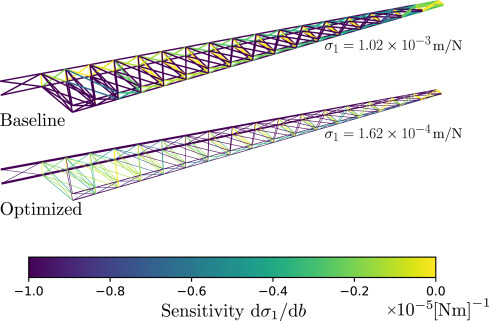
In this work, we differentiated the singular value decomposition using a hybrid adjoint-RAD based method, which scales favourably for large number of design variables with respect to chosen objective function. The following are the key contributions:
- We develop two adjoint-based approaches to compute the derivative of the SVD problem for general imaginary (square and rectangular) matrices efficiently.
- We develop a RAD-based analytic formula to compute the singular value derivative with respect to a imaginary input matrix, which also works with real-valued matrices in a reduced form.
- We propose a generic dot product identity as a tool to derive complex-valued RAD derivative formulae using FAD derivative formulae for imaginary differentiable functions.
- Demonstration of algorithm using large DNS simulation dataset and wing truss optimization with 315 design variables.
UniFoil – A Universal Dataset of Airfoils in Transitional and Turbulent Regimes for Subsonic and Transonic Flows
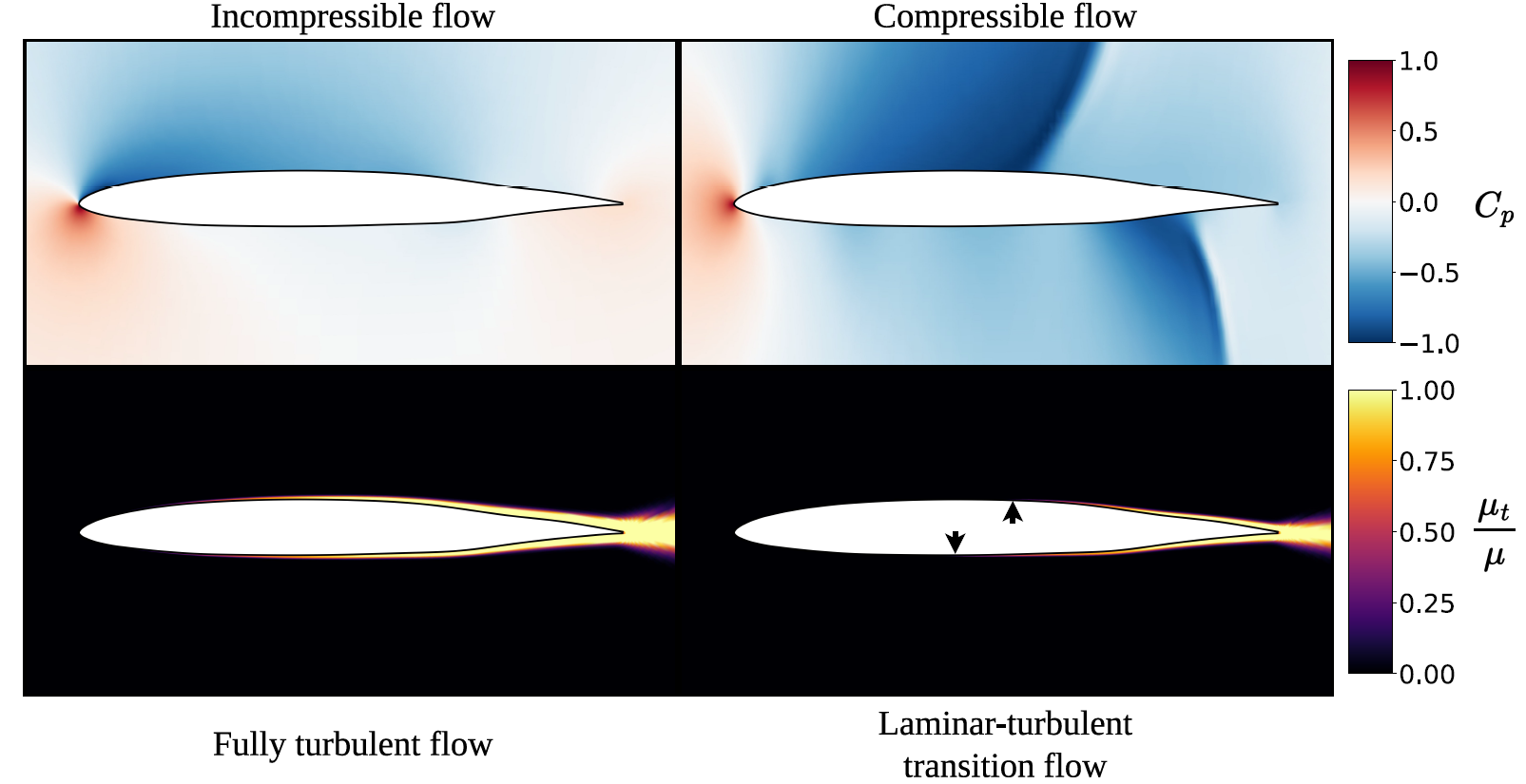
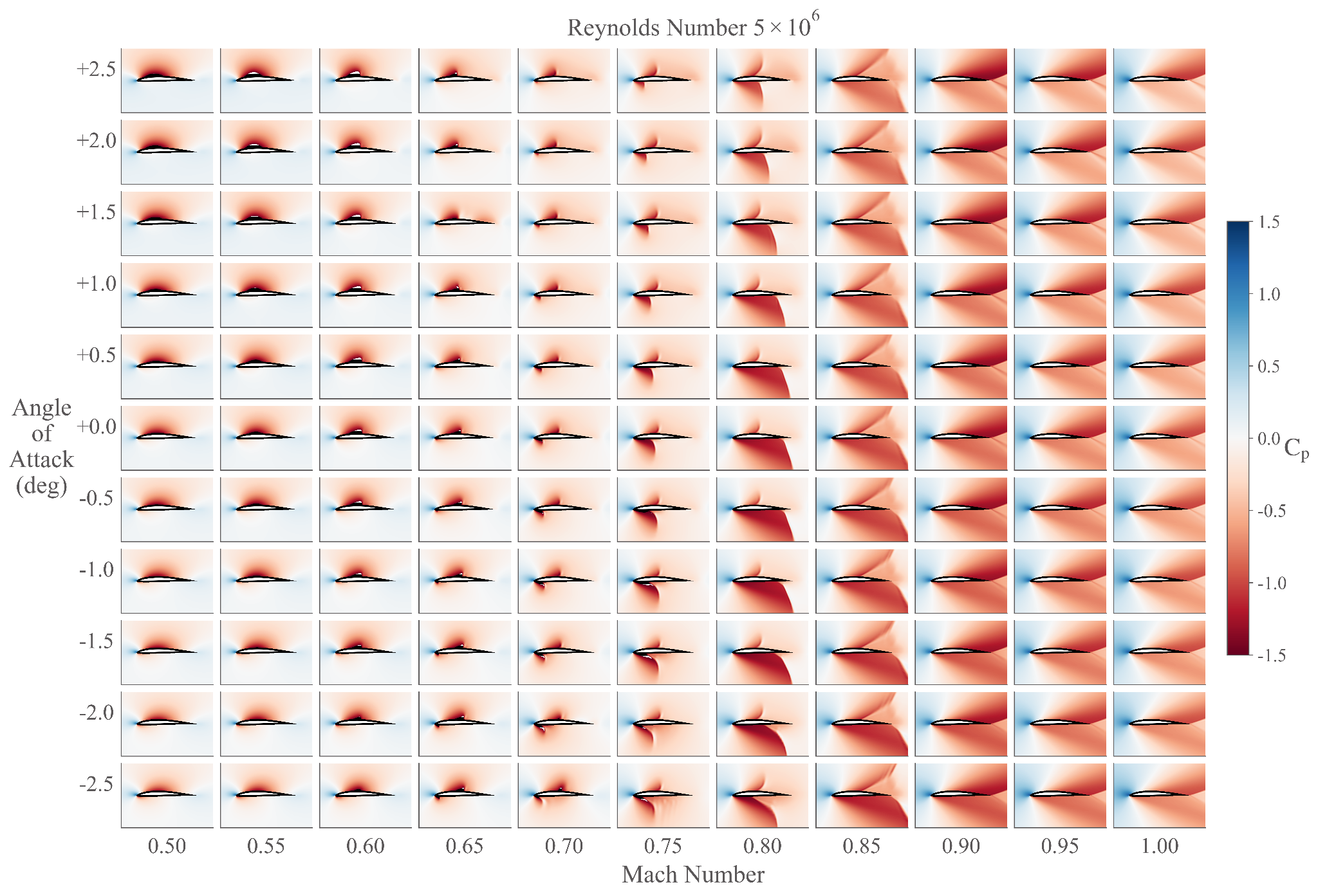

In this work, I developed a dataset using ADflow solver. The dataset consists of over half a million steady state RANS and Transition modelled simulations for airfoils in mainly two classes, fully turbulent (FT) and natural laminar flow (NLF). Following are the key features of this dataset:
- 30k FT and 4.8k NLF airfoil geometries.
- ~400k simulations for FT airfoils fully turbulent - RANS.
- ~50k simulations for NLF airfoils fully turbulent - RANS.
- ~50k simulations for NLF airfoils - RANS e^N transition model.
- Comes with an interface - pip install unifoil
- Presented at NeurIPS 2025 conference. Useful for 2D training of neural operators.
- Refer to link below for more details !
Modal-Centric Field Inversion via Differentiable Proper Orthogonal Decomposition
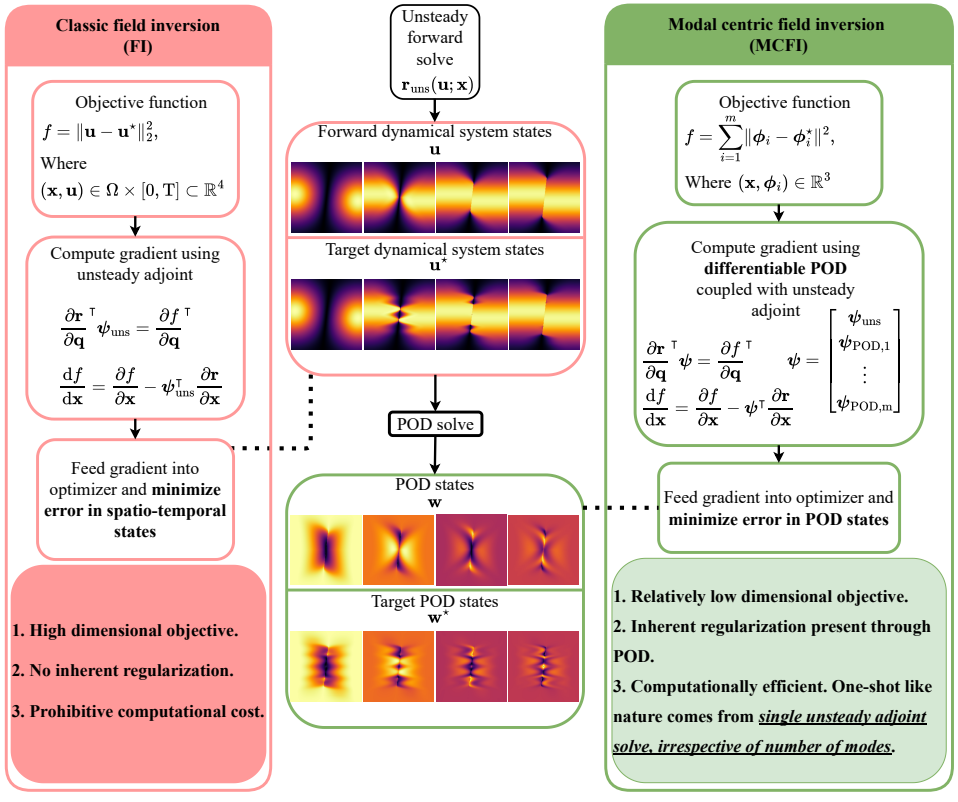
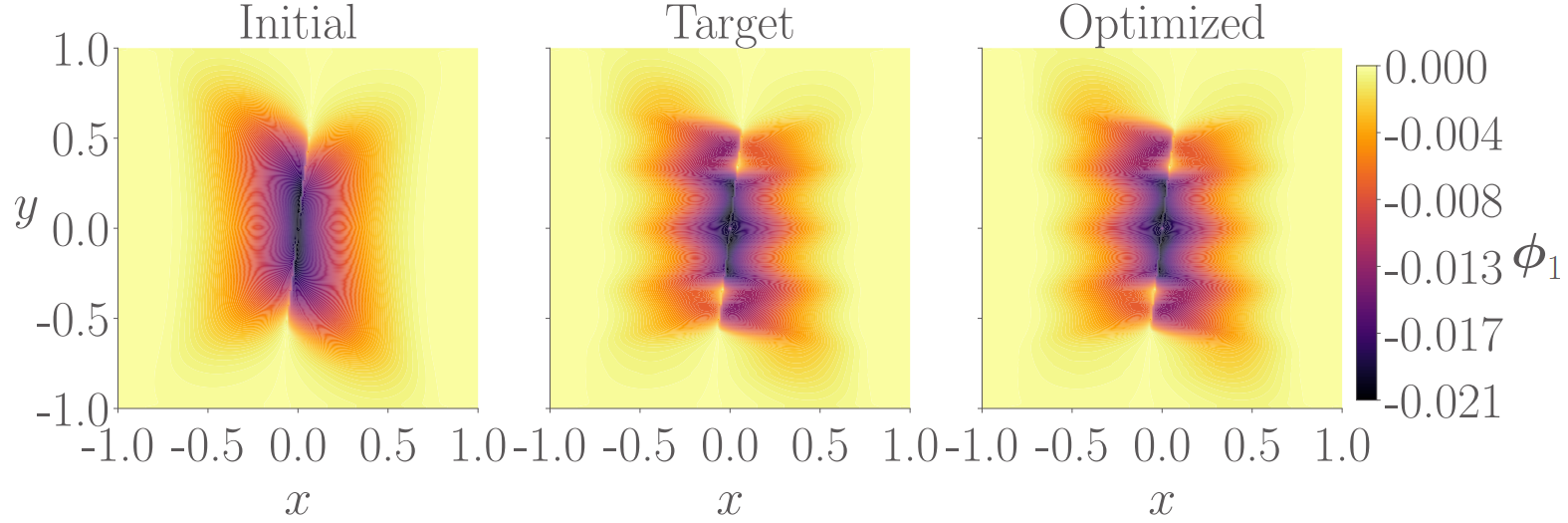
In this work, the differentiable SVD mentioned above is extended to POD. We use differentiable POD in modal centric field inversion. The following key points explain what this work is about:
- Classic field inversion (CFI) in spatio-temporal state space can get computationally intensive.
- CFI can become computationally intractable if the point to point spatial structures must be matched in optimization problem.
- Instead, it is proposed to perform field inversion in the reduced state space through modal decomposition techniques, hence the name "modal centric field inversion". In this work, we chose POD for demonstration.
- The advantage of this is that the modes obtained are strongly tied to the underlying dynamical system through SVD and can represent the spatio-temporal field through just a few modes. This also entails inherent regularization for the optimization problem.
- Algorithm is verified through finite difference method and application demonstrated through the 2D viscous Burger's equation.
Effects of Inlet Velocity Profile on the Bubble Dynamics in a Fluidized Bed Partially Filled with Geldart B Particles
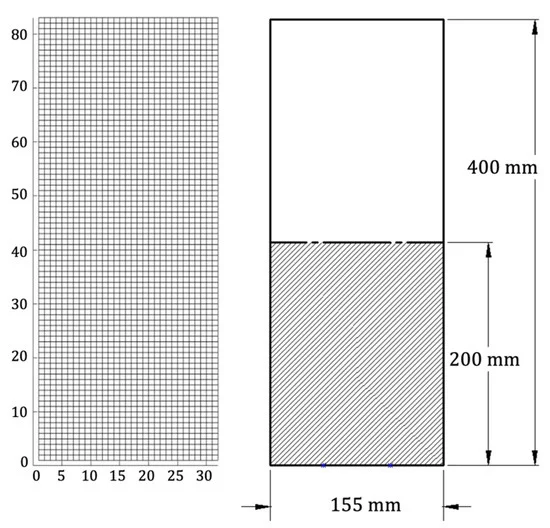
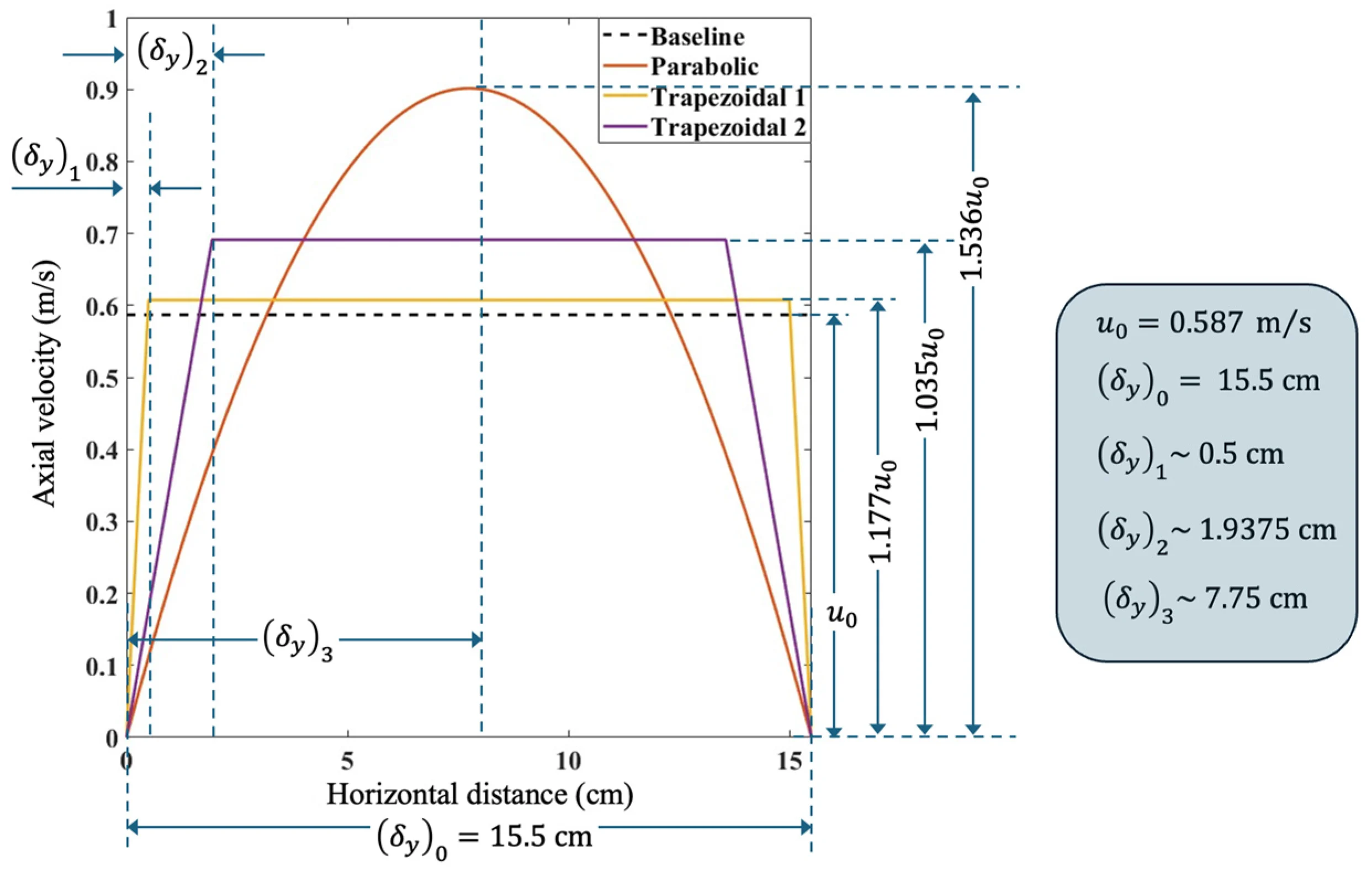
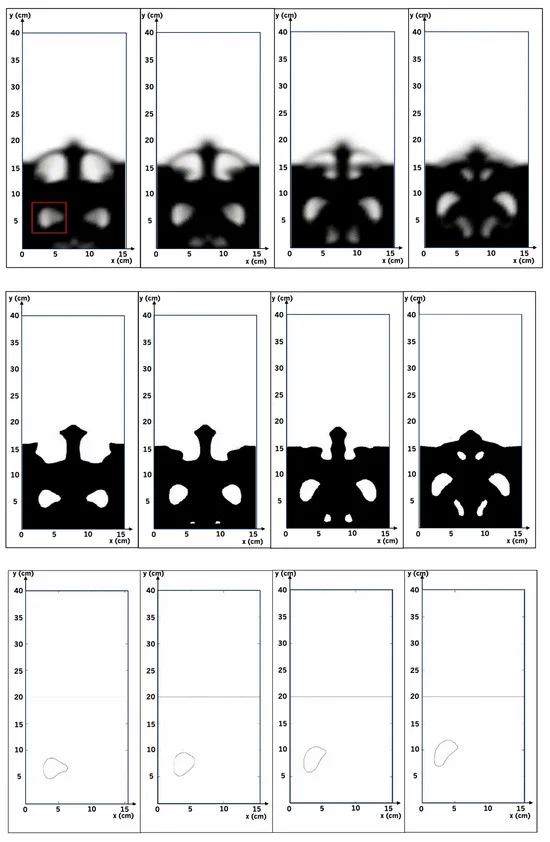
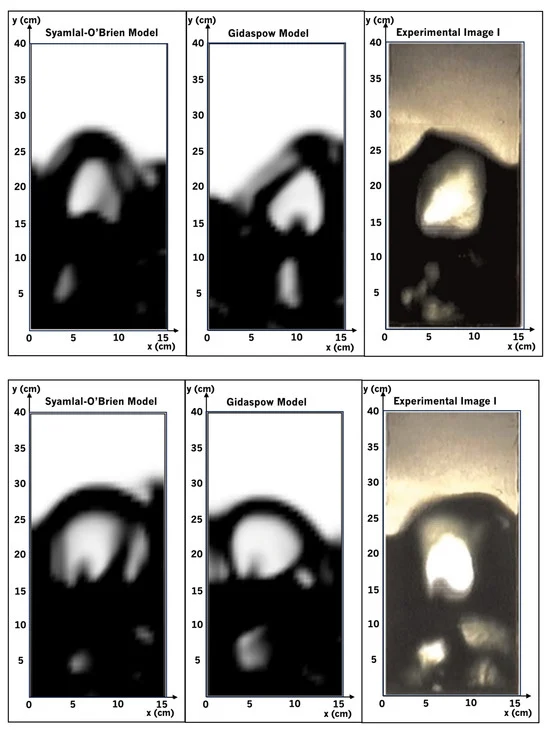
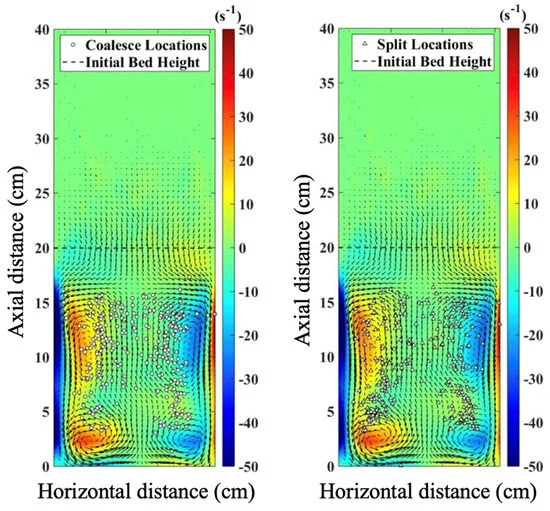
In this work, we studied the effects of varying the inlet velocity profile for a fluidized bed filled with Geldart B class of particles. The following key studies were conducted:
- Successfully validated numerical model with drag models Syamlal-O’Brien and Gidaspow's models against Experimental data. Gidaspow's model yielded better prediction for average bed height.
- Validated approach used for studying bubble breakup and coalescence incidences using bubble dynamics capturing algorithm written in-house.
- Results showed that the bubble dynamics which looks random to naked eye in fact follows very interesting patterns and these patterns linked with the inlet velocity profile can help to augment the bed heat transfer to desired characteristics.